Wednesday, September 13, 2006

passing

Barring a miraculous 7 plunks in the last weeks of this season, Craig Biggio will finish the 2006 season without passing anyone on the all time HBP list. This will be the first season he hasn't passed anyone on the plunk list since 1988. Obviously, there is only 1 person left to pass since Biggio is #2 on the all time list, and as Biggio has moved higher up the ladder, the passings have became less frequent. But, the number of days between Biggio passing Tommy Tucker, and whenever he passes Hughie Jennings will be the longest time he's spent on any rung of the HBP ladder since his first plunk. Biggio spent 480 days at #6 on the all time list after passing Frank Robinson on April 13, 2002 on plunk #199, until he passed Dan McGann on plunk #231 on August 6, 2003. It was a year ago yesterday that Biggio passed Tucker for #2 on the list, and by April 1st of next season, it will have been 566 days and counting.

Biggio hasn't passed an active player on the HBP list since August 30, 1997 when he recorded plunk 109 tying him with Sherry MaGee and Andres Galarraga and August 31st when he moved into sole possession of 33rd place on the all time list with plunk 110. Galarraga got his 110th plunk on September 10th that year, but by that time Biggio had 113. Biggio has been #1 on the active list ever since. Galarraga would eventually climb to 10th on the list with 178 career HBPs when he retired after the 2004 season, but Jason Kendall has since knocked him down to 11th. Kendall passed Galarraga on May 6, 2005.

Here is Biggio's rank on the all time plunk list as of the end of each season since 1988:
1988 - 5,635th (tied)
1989 - 2,276th (tied)
1990 - 1,850th (tied)
1991 - 1,624th (tied)
1992 - 1,092nd (tied)
1993 - 675th (tied)
1994 - 447th (tied)
1995 - 170th (tied)
1996 - 68th (tied)
1997 - 26th
1998 - 14th (tied)
1999 - 11th (tied)
2000 - 10th
2001 - 7th
2002 - 6th
2003 - 5th
2004 - 4th
2005 - 2nd
2006 - 2nd?


Here are the last 40 players Biggio has passed on his way up the plunk list, with the rank they held before Biggio came along, and the dates Biggio tied and passed them - with links to the retrosheet.org boxscores:
PlayerHBPsRankTiedPassed
Tommy Tucker272209/03/200509/12/2005
Don Baylor267306/28/200506/29/2005
Ron Hunt243404/24/200404/25/2004
Dan McGann230507/12/200308/06/2003
Frank Robinson198604/10/200204/13/2002
Minnie Minoso192707/28/200108/18/2001
Jake Beckley183806/29/200106/30/2001
Curt Welch173904/20/200104/29/2001
Kid Elberfeld1651006/09/200006/13/2000
Fred Clarke1531109/13/199904/29/2000
Chet Lemon1511207/25/199909/09/1999
Carlton Fisk1431304/25/199905/04/1999
Nellie Fox1421408/24/199804/25/1999
Art Fletcher1411508/20/199808/24/1998
Bill Dahlen1401608/11/199808/20/1998
Frank Chance1371707/21/199807/27/1998
John McGraw1341807/04/199807/11/1998
Dummy Hoy1341807/04/199807/11/1998
Nap Lajoie1341807/04/199807/11/1998
Steve Brodie1322106/22/199807/04/1998
Brian Downing1292206/17/199806/20/1998
Willie Keeler1292206/17/199806/20/1998
Honus Wagner1252405/20/199805/23/1998
Buck Herzog1202504/01/199804/28/1998
Jimmie Dykes1152609/12/199709/17/1997
Sherm Lollar1152609/12/199709/17/1997
Bill Freehan1142809/12/199709/12/1997
Frankie Crosetti1142809/12/199709/12/1997
Steve Evans1113009/01/199709/07/1997
Andre Dawson1113009/01/199709/07/1997
George Burns1103208/31/199709/01/1997
Sherry Magee1093308/30/199708/31/1997
Andres Galarraga109*3308/30/199708/31/1997
Bill Joyce1083508/27/199708/30/1997
Pete Rose1073608/24/199708/27/1997
Wally Schang1073608/24/199708/27/1997
Dan Brouthers1053708/17/199708/23/1997
Tris Speaker1033808/12/199708/17/1997
Orlando Cepeda1024008/12/199708/12/1997
Henry Larkin1004107/25/199708/09/1997

*Andres Galarraga, as noted above, had 178 career plunks, but he was at 109 when Biggio passed him.

27 of the above named players did not live long enough to see Craig Biggio pass them on the all time HBP list.

Labels: , , , , ,

Wednesday, July 13, 2005

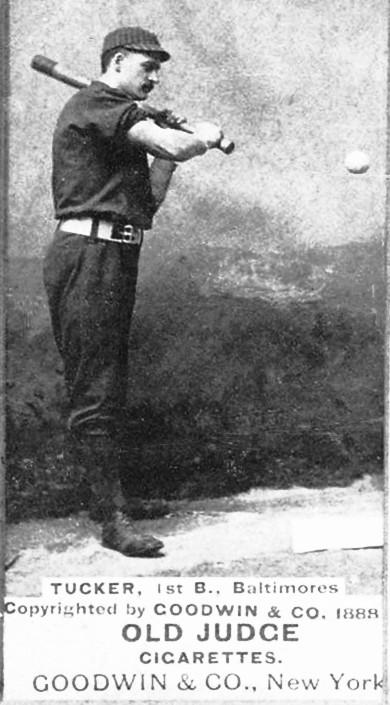
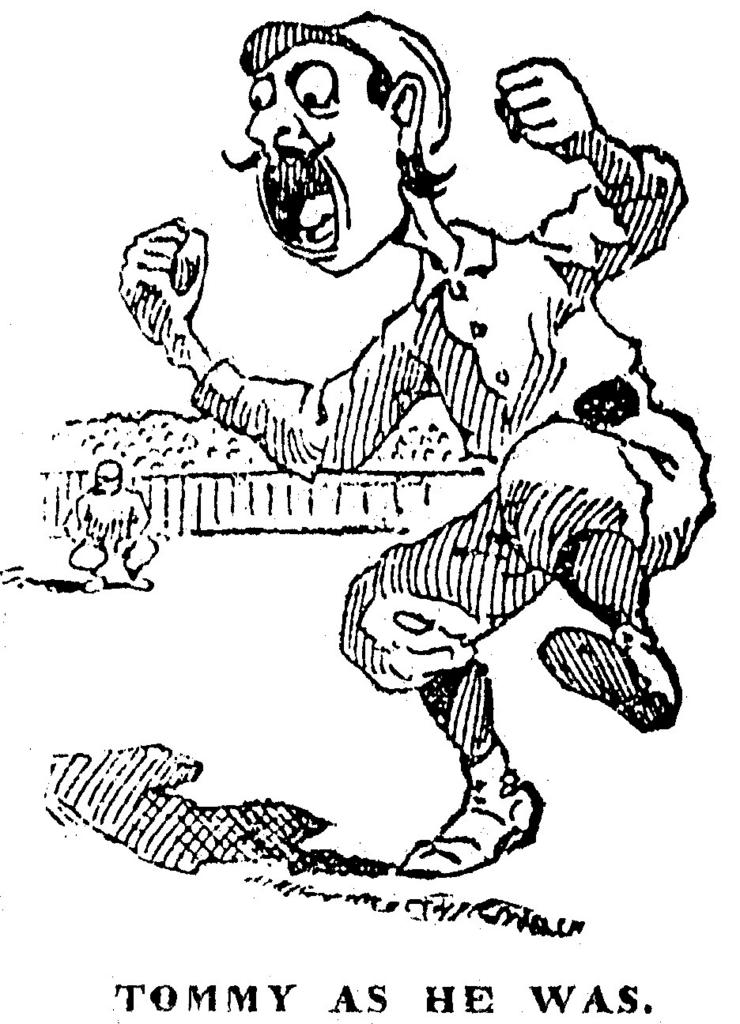
Tommy Tucker Appreciation Day


The All-Star break drags on, and Craig Biggio was never hit by a pitch on July 13th so it's an excellent time for a special feature. Today we have a special guest blogger - an author of several books on pre-1900 baseball with expertise on the subject of Tommy Tucker. Tommy Tucker is #2 on the all time hit-by-pitch list and held the record from 1893 to 1901 when Hughie Jennings passed him, 2 years after Tucker's retirement. Howard W. Rosenberg has graciously contributed the following to Plunk Biggio:

Among the all-time top three in HBPs, easily the least-known player is Tommy Tucker. However, in a way, he used to be a household name greater than Craig Biggio and Hughie Jennings. That’s because when he played 100 years ago, a Mother Goose poem bearing his name had yet to fall into obscurity.

The Tommy Tucker of Mother Goose and his baseball namesake didn’t have much in common except for drawing lots of laughs. That the baseball Tucker was a target of humor may seem quite remarkable considering that he is the leading candidate for dirtiest player of the 19th century. I concluded that in my 2005 book Cap Anson 3, which features tricky and dirty play. In one of the chapters, Tucker shares top billing with the sport’s greatest pest through 1900, Baltimore third baseman John McGraw.

I found that Tucker was easily the dirtiest first baseman through 1900. At the base, he was known for blocking off runners on pickoff plays. However, while he was hit by a pitch so many times, I didn’t find reporting that claimed he was being retaliated against for his blocking around the base.

He overrode his image as a blocker by being so entertaining in his coaching, fielding and sliding. Those were the days when the coaching was done by active players and not washed-up ones. He was playing for Boston in 1894 when a writer compared his style of talking to that of Chicago captain-manager Cap Anson. "Gow an, git a gait! Move up there, yer kin steal home," Tucker had said in a recent game while Anson, from first base, spoke in this tone: "Two men out, gentlemen."

"Has the hub of the universe shifted several points westward?" the above writer said, mocking Boston as the intellectual hub of the country.

One day in 1893, three-fourths of the Boston crowd had applauded for a minute when he first came to bat. During the applause, "a few old ladies blushed at such hilarity from a cultured Boston assemblage." After the game, "Tucker looked like an invited guest to a boiler explosion," the Boston Globe said. "His clothes were covered with mud, but he felt good—his fielding bordered on the phenomenal, and the spectators cheered him all through the game for the interest and life he put into the boys."

Early in the 1894 season, former player Sam Crane wrote the following in the New York Press, after seeing him play: "Tom Tucker’s earnestness is refreshing. He grabs at thrown balls as if to say `Come here, I want to eat you.’ And he eats them."

Tucker had come under strong criticism in 1893 after Cleveland’s Chief Zimmer suffered a broken collarbone when he dove back into first base, and Tucker blocked him off. In 1894, the Globe printed the following: "R. C. J. writes to ask The Globe whether Tucker is considered a dirty ball player or not." The response, possibly by the Globe's Tim Murnane, himself a former player who added the “e” to his last name to sound more sophisticated, was, "Tucker is a hard worker and very earnest, a little loud at times, but one is not considered a `dirty' player until he tries to injure a fellow player."

Tucker’s most famous moment on the road took place in 1894 at Philadelphia. That July, Boston tried in vain to delay a game during an inning in which Philadelphia had taken a large lead. Boston had been ahead at the end of the last fully played inning and wanted the umpire to call the game to darkness before the current one was completed. That way, the score would have reverted to the end of the prior inning, and Boston would have won. After Philadelphia was able to end its turn at bat by running one of its players out of the base line, Boston refused to continue and the umpire forfeited the game to Philadelphia. Right after he did, some fans seemed to have had a "preconcerted plan to attack Tucker, for they fairly swarmed around this player before he had gotten three steps from first base." Contrary to some reporting, Tucker’s cheekbone was not broken; he merely had a "slight swelling on his left cheek." Three Philadelphia players and police helped get Tucker away from the fans.

The next day, while he was in Boston’s carriage, an "unripe tomato" landed full on his face. One of Tucker’s teammates went to the boy who threw it and "slapped and kicked him." When Tucker got out of the carriage, a man hit him in the mouth and fled on a passing trolley car. Tucker told a policeman to arrest the man, and when he got away, Tucker verbally abused the officer and was arrested. His manager, Frank Selee, obtained his bail just before Boston's train was to leave.

Two days later, Tucker told the Boston Journal, "I don’t care to go through such a scrape again. I’m not looking for trouble; you know that. There’s nothing in it for me."

In the following month, Brooklyn's Oyster Burns was leading off first. On a pickoff throw, he "started for second, and at the same time threw some dirt in front of Tucker, so that that player could not see the ball." Burns made it to third. After the inning, "Tucker tried to find sympathy with the spectators, but his tale of woe was greeted with laughter." Tucker and a fan said this to each other, as captured by the Brooklyn Eagle:

Tucker: It was a dirty trick.
Fan: Oh, I dunno. How about your self [sic]?
Tucker: Who, me? Why I never did anything like that in all my twelve years of playing. I might kick [argue with the umpire] and yell, but I’d never throw dust in a man’s eyes. That’s a dirty trick.

Tucker had been drawing colorful coverage back in the 1880s, soon after the start of his big league career in 1887, with Baltimore. He was still with Baltimore in 1889 when longtime writer Henry Chadwick reportedly roasted him for his boisterous coaching. The Baltimore writer for the weekly Sporting Life, gave this defense:

Father Chadwick has given people who are not acquainted with Tucker the impression that he is a hoodlum. Tucker is a married man, and as such should be very domestic in his habits. Father Chadwick himself cannot boast of better morals than Tom Tucker practices. When he is not engaged on duty at a game or practice he is at home with his family, and not frequenting saloons or gambling places. When he is on the road with the team he is the one in whom the manager can place implicit confidence as to personal conduct. In fact, Tom manages his own conduct better than a [Charley] Comiskey[, captain-manager of St. Louis, the best team in Tucker's league, the American Association,] could manage it for him. No doubt Comiskey could drill him into even a better player than he is now, but Tucker’s morals are quite as perfect as Comiskey’s, or any other base ball player. Tucker is boisterous and noisy on the field, and that is the worst that can be said of him. Father Chadwick observes this, and immediately jumps to the conclusion that he is a tough.

Jumping to the end of Tucker’s career:

In 1898, his second-to-last season, he figured in the following report with Hughey Jennings (that was how Jennings’s name was spelled at the time). Tucker was now with St. Louis and the St. Louis Star said, "Jennings complains that when playing off first Mr. Tucker resents his attempts to return suddenly by putting his knee in his face or else sitting down on him. Mr. Tucker says that Mr. Jennings always returns spikes first and with malicious intent."

His final season, 1899, was with Cleveland, and he was the first baseman on a team that won just 20 games and lost 134, the worst record in big league history. The Cincinnati Enquirer called him "the harum scarum first baseman of the scrub Cleveland team."

He went out with a flourish, as one of his most entertaining plays occurred in September. After Chicago’s George Magoon beat out a grounder by sliding into first base, Tucker ran to the umpire to argue. Then Tucker reversed himself "and picked Magoon up, swinging him clear of the ground, after which performance he stood the shortstop on his feet and brushed the dust off his uniform." Magoon and Tucker were about the same size and weight.

A native of Holyoke, Mass., he died 30 miles north of there, in Montague, in 1935. By all accounts, although he had a number of children, and some of his grandchildren are alive today, life was never the same after his retirement, and, of course, baseball was never the same, especially as players never again had so much freedom to do boisterous coaching. Tucker did tell stories in the twentieth century of his scrapes with various players, including Baltimore’s McGraw. However, getting hit by so many pitches was kind of an afterthought. Rather than opposing pitchers, it was runners who visited at first or opposing fielders on the basepaths, who tried to get even with him, that provided his greatest memories.

Labels:

Monday, June 27, 2005

Inspirational

It's a sports cliche that some managers can get their players to run through walls for them, but not many can get a player to take over a hundred plunks. Larry Dierker got 112 plunks out of Craig Biggio, and only 6 managers had a player get more HBPs for them (not including Fred Clarke who was hit 125 times as a player/manager).
Most plunks by player/manager combinations:
ManagerPlayerSpanPlunks
Ned HanlonHughie Jennings1893-1903245
Frank SeleeTommy Tucker1890-1897150
John McGrawArt Fletcher1909-1920132
Fred ClarkeHonus Wagner1897-1915116
Joe McCarthyFrankie Crosetti1932-1946114
Gene MauchRon Hunt1971-1974114
Larry DierkerCraig Biggio1997-2001112
Connie MackJimmie Dykes1918-193293
Joe Torre...*1996-200492
*Some overrated Yankee who gets too much press as it is, and I'm not printing his name.

Not only did Larry Dierker manage Biggio for more of his plunks than any other Astros manager, he inspired Biggio to a higher ratio of HBPs per plate appearance than any other - that could have something to do with Dierker's Astros 3 first place finishes. However, current manager Phil Garner has gotten more home run power from Biggio than any previous manager.

YearsManagerPlate AppearancesHBPHRHBP/PAHR/PA
1988Hal Lanier1310300.0229
'89-'93Art Howe316628480.008840.01516
'94-'96Terry Collins190757430.029890.02255
'97-'01Larry Dierker3414112860.032810.02519
'02-'04Jimy Williams176155430.031230.02442
'04-?Phil Garner60215200.024920.03322

Labels: , , ,

Wednesday, June 22, 2005

notes on 266

Today's game was the 20th time Craig Biggio has been hit twice in the same game, and Jason Jennings was the 12th pitcher to hit him twice in the same game. He's just the second pitcher to hit Biggio twice in the same game for the Rockies, but Pedro Astacio did it on two separate occasions.
Today also marked the 6th time he's been plunked 3 or more times in 2 days, including these same two days two years ago - June 21st and 22nd of 2003. On May 7th and 8th of 2000 he was hit twice in 2 consecutive games, his only 4 plunk 2 game span. But, today was the first time he was hit twice in a day game following a night game when he was plunked so it's a reasonable guess that the approximately 17 hours between plunk 264 and 266 was the fastest 3 plunk span in Biggio's career. He has never been hit 3 times in the same game, and he has never been hit in both games of a double header.
Also, between the 7th inning last night and the 3rd inning today he was plunked in 3 consecutive plate appearances. That may be the only time he's ever done that but I can't fully rule out August 2nd and 3rd of 1996 and July 20th and 21st in 1995 just from their box scores.

Don Baylor's 266th HBP came on September 25, 1988, 5 days after his 265th on September 20.

Tommy Tucker's 265th and 266th HBPs came sometime during 1899.

Hughie Jennings 265th and 266th HBPs occured sometime during 1901.

Labels: , ,